A clean porta potty is mostly a schedule problem. Get the visit frequency right for the number of users, keep the path open, and the unit stays usable all month.
How often are porta potties serviced?
Long-term porta potties on construction and residential sites are serviced once a week, and that weekly visit is included in the 28-day rate. Low-use sites can switch to every-other-week service. Busy sites with more than 10 workers per unit should add a second weekly visit.
| Rental type | Standard service | Options |
|---|---|---|
| Construction job site | Weekly, included in 28-day rate | Second weekly visit if more than 10 workers per unit |
| Home remodel or residential | Weekly, included in 28-day rate | Every other week for low use |
| 1-day event | Delivered clean, sanitized and stocked | Usually no visit needed |
| Multi-day event | Delivered clean, sanitized and stocked | Mid-event service visit |
| Restroom trailer | Delivered clean | Attendant or between-day restock |
On job sites, weekly service also helps you meet federal rules. OSHA 1926.51 sets the toilet count per worker and requires washing facilities to be kept in a sanitary condition.
What happens during a porta potty service visit?
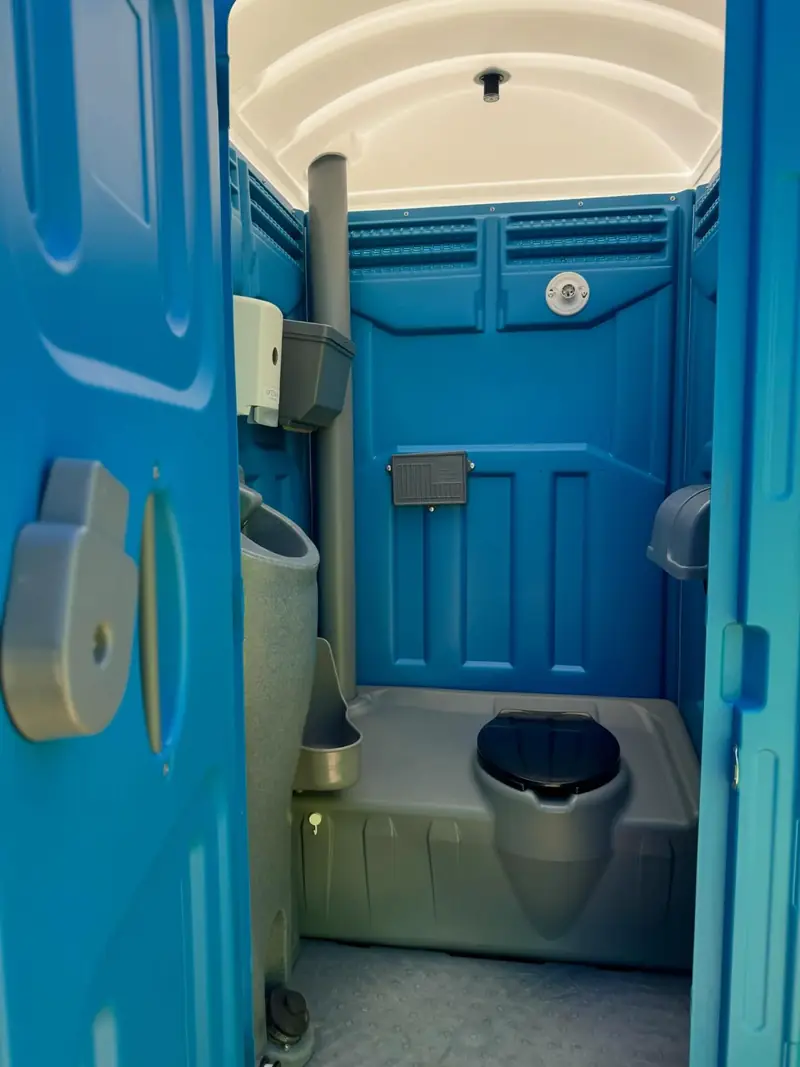
A porta potty service visit has 5 steps: pump the waste tank, scrub and sanitize the surfaces, add fresh blue deodorizing chemical, restock toilet paper and hand sanitizer, and do a final check. Units with a sink also get fresh water, soap and paper towels. The same 5 steps happen at every weekly visit.
- Pump out. The truck parks close by and a hose pumps the 60-gallon waste tank empty.
- Scrub and sanitize. The seat, urinal, walls, floor and door handles are cleaned and sanitized.
- Recharge the tank. Fresh blue deodorizing chemical and water go into the empty tank to control odor.
- Restock. Toilet paper and hand sanitizer are refilled. Sink units get fresh water, soap and towels.
- Final check. The driver checks the door latch, the "occupied" indicator and that the unit sits level.
Drivers also note problems like graffiti, damage or a unit that has been moved. Damage beyond normal use is the renter's responsibility, so a quick heads-up helps both sides.
How does the blue chemical control odor?
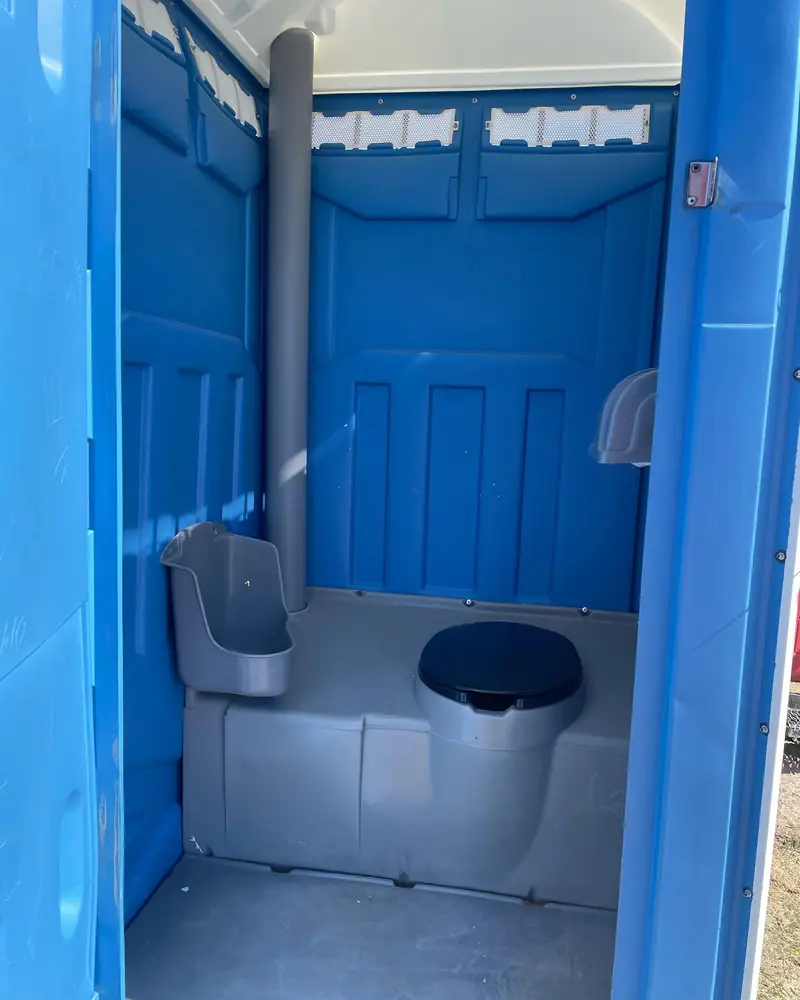
The blue deodorizing chemical added at every service visit slows the breakdown of waste and masks smells inside the 60-gallon tank. The chemical works best when the tank is not overfilled. Once a unit serves too many people between visits, no amount of chemical keeps up, which is why frequency matters most.
The vent stack pulls air up and out of the stall. Keeping the door closed lets the vent do its job.
Heat speeds everything up. Our Nashville summer heat tips cover shade and extra visits for hot months.
What supplies are restocked at each service visit?
Every service visit restocks 2 supplies in a standard porta potty: toilet paper and hand sanitizer. Units with a sink also get a fresh-water refill, soap and paper towels. Hand washing stations get fresh water, soap and towels, and their gray-water tank is emptied at the same visit.
- Standard unit
- Toilet paper and hand sanitizer
- Standard with sink
- Toilet paper, sanitizer, fresh water, soap and paper towels
- Deluxe flushing unit
- Toilet paper, flush water, sink water, soap and towels
- Hand washing station
- Fresh water, soap and paper towels; gray water pumped out
Running out between visits usually means the unit has more users than planned. A second unit or a second weekly visit fixes that for good.
What can renters do between service visits?
Renters can keep a porta potty fresh between visits with 5 simple habits: keep the lid and door closed, keep trash out of the tank, keep the unit level and in place, keep the service path clear, and tell us early if supplies run low. Those habits make weekly service last.
- Trash stays out. Bottles, rags, wipes and debris clog the pump hose and fill the tank.
- Do not move it. A unit with waste in it can spill or tip.
- Keep it in shade. A cooler unit smells less.
- Add a hand wash station. A hand washing station keeps people from using the sanitizer for heavy cleanup.
- Speak up early. Text when paper is low instead of waiting for service day.
When should I add extra service or switch to every other week?
Add an extra service visit when a unit serves more than 10 workers on 40-hour weeks, before an inspection or client walk-through, or before a big family gathering. Switch to every-other-week service when only 1 or 2 people use the unit a few days a week. Extra visits carry an extra charge.
Crew size grows on most jobs. When the framers and the drywall crew overlap, it is often cheaper to add a second unit than to add visits. The porta potty calculator shows both options.
Every-other-week service suits a weekend remodel or a single plumber on site. Ask when you book or anytime during the rental.
What happens if the service truck can't get to the unit?
If the service truck cannot reach a porta potty because of a locked gate, parked cars, deep mud or stacked materials, the unit cannot be pumped that day. A second trip may count as an extra service visit. Keeping a 48-inch path within about 15 feet of truck parking prevents most missed visits.
- Text the gate code or the hours the gate is open.
- Tell us if the site will be closed on service day.
- Move the unit's location only with our help, and only to a spot the truck can still reach.
- After heavy rain, lay gravel or plywood on soft ground near the unit.
Our porta potty placement guide covers spots that stay reachable all month. Ready to set up serviced units? See construction site portable toilets or call (615) 237-6088.